
Protecting Your Sight for the Future
Many eye diseases begin to develop quietly without any early warning signs or noticeable symptoms. Left undetected, these conditions can progress to the point of permanent vision loss.
Regularly scheduled eye exams are essential because they allow your optometrist to detect subtle changes to your eye health before symptoms ever emerge. Catching an eye disease early allows our team to prescribe a targeted treatment plan to manage the condition and help prevent vision loss over time.
Taking a proactive approach today protects your sight for years to come. Book your eye exam with RVEC today.
Technology for Early Disease Detection
Catching eye conditions in their earliest stages relies on thorough evaluations and precise diagnostic technology. At RVEC, we use imaging systems to gain a complete view of your internal and external eye health.
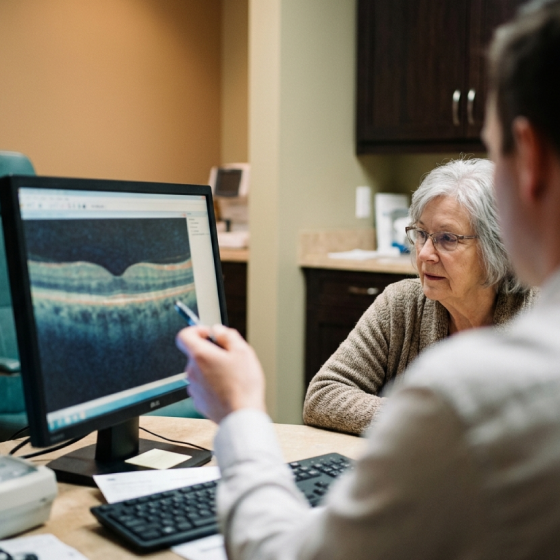
Tools like ultra-widefield retinal imaging and OCT scans capture high-resolution pictures of the retina and optic nerve, while tonometry measures internal eye pressure. We also use visual field testing to evaluate your peripheral sight and corneal topography to map the surface of your eye and test tear film stability.
Together, these noninvasive tools help us assess for signs of various conditions, including dry eye syndrome, glaucoma, and diabetic eye disease.
Comprehensive Care for Glaucoma
Glaucoma is a group of eye conditions that damage the optic nerve. This nerve is responsible for sending visual information from your eye to your brain, a vital part of functioning vision.
This damage is often linked to abnormally high pressure inside the eye. Glaucoma is known for its silent progression; it typically develops slowly without pain or early symptoms. The condition gradually causes peripheral vision loss first, which may go unnoticed until a substantial amount of vision is lost.
Open-angle glaucoma is the most common form, occurring when the eye’s drainage canals become blocked over time.
Angle-closure glaucoma is less common and occurs when the drainage angle closes suddenly, causing a rapid spike in eye pressure that requires immediate medical care.
Normal tension glaucoma refers to damage to the optic nerve that occurs despite the internal eye pressure staying within a normal range.
We use tonometry to measure your internal eye pressure, OCT imaging to evaluate the health and thickness of your optic nerve fibres, and visual field testing to monitor your peripheral vision for subtle changes.
While lost vision cannot be restored, glaucoma can be managed effectively. We can prescribe targeted eye drops or oral medications to lower eye pressure and protect your optic nerve. If more complex treatment is required, we provide surgical referrals alongside complete pre- and postoperative care.
Diagnosing and Managing Other Common Eye Conditions
Eye health assessments are a part of every comprehensive eye exam to screen for any potential concern and prevent serious eye conditions from going undetected. If we do detect an eye disease during your exam, we’ll be here to guide you through the next steps.
Our compassionate team supports you through every step of your care, from initial diagnosis to personalized treatment plans and seamless referrals to ophthalmology specialists when necessary.
AMD affects the macula, the central part of the retina responsible for sharp, straight-ahead vision. It comes in two forms: dry AMD, which involves a gradual thinning of macular tissue, and wet AMD, which involves abnormal blood vessel growth under the retina.
We use OCT scans and retinal imaging to detect and track AMD, and we recommend specialized nutritional supplements to support ongoing retinal health.
A cataract occurs when the eye’s natural lens becomes cloudy, causing vision to feel blurry, hazy, or dimmed over time. While cataracts are a natural part of aging, they can occur earlier and progress faster in individuals living with diabetes, hypertension, chronic kidney disease, and those who take certain medications, such as corticosteroids.
In the early stages, updating your glasses prescription helps maintain clear sight. As cataracts progress to the point of interfering with daily activities, we offer surgery co-management, helping you prepare for procedure day and guiding your recovery afterwards.
High blood sugar can damage the delicate blood vessels in the retina, leading to diabetic retinopathy or diabetic macular edema.
We closely monitor these changes using Optos ultra-widefield retinal imaging and OCT scans, which allow us to view the majority of your retina in a single, comfortable image. We can also prescribe medications, coordinate care with your primary care physician, and help prevent future changes.
Dry eye occurs when your eyes do not produce enough tears or when tear quality is compromised, causing persistent burning, grittiness, or redness. Because dry eye can stem from different underlying causes, an accurate diagnosis is essential.
We offer thorough dry eye assessments, followed by tailored treatment solutions, including IRPL therapy, LipiFlow thermal pulsation, and targeted eye health supplements to relieve discomfort and protect the surface of your eye.
Partnering in Your Long-Term Vision Health
Routine eye exams are the single most effective way to monitor your eyes, catch conditions early, and preserve your sight.
Because everyone’s eyes are unique, your optometrist will recommend an eye exam schedule tailored to your personal needs, taking into account factors like your age, family health history, and existing health conditions. Together, we can maintain healthy vision for life.
Brands We Carry










Visit Us in North Battleford or Unity
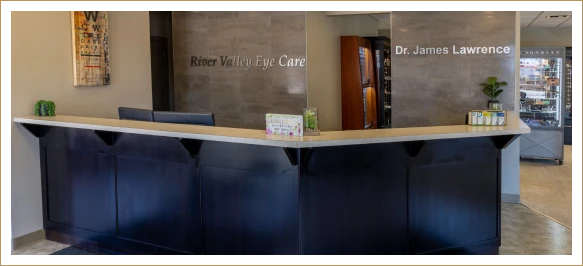
North Battleford
Address
- 1471-100 Street
- North Battleford, SK S9A 0W1
Contact Information
- Phone: 306-445-4451
- Email: info@rivervalleyeyecare.com
Hours of Operation
*Closed from 12:00-12:45 PM for lunch
Unity
Address
- 264-2 Ave West
- Unity, SK S0K 4L0
Contact Information
- Phone: 306-228-2722
- Email: info@rivervalleyeyecare.com
Hours of Operation
*Closed from 12:00-12:45 PM for lunch
**Contact the clinic for doctor availability. See social media for updated weekly hours.

About Us
Specialty Eye Care
Eyewear & Contacts
Our Locations
North Battleford
- 1471-100 Street
- North Battleford, SK S9A 0W1
Unity
- 264-2 Ave West
- Unity, SK S0K 4L0
Contact Us
North Battleford
- Phone: 306-445-4451
- Email: info@rivervalleyeyecare.com
Unity
- Phone: 306-228-2722
- Email: info@rivervalleyeyecare.com