
Supporting Your Child’s Vision
Myopia, or nearsightedness, is on the rise among children today. Because kids often adapt to gradual changes in their sight, progressive vision issues can easily go undetected without a comprehensive eye exam.
Unaddressed myopia can make seeing the classroom board or keeping up with sports frustrating for a growing child. Catching these changes early creates a clear path forward for their learning and development. It can also make a difference in their future eye health by preventing changes that increase their risk of future eye diseases.
Our team at RVEC is here to support your child’s eye health at every stage.
What Is Myopia and How Does It Progress?
Myopia occurs when the physical structure of the eye grows slightly too long from front to back, or when the cornea is overly curved. This causes distant objects to look blurry while close-up items stay clear.
As children grow, their eyes grow as well, which can cause nearsightedness to progress rapidly during childhood. Beyond requiring stronger glasses each year, higher levels of myopia increase the long-term risk of developing serious eye conditions later in life, including glaucoma, retinal detachment, myopic maculopathy, and cataracts.
What Factors Contribute to Nearsightedness?
While myopia is becoming increasingly common in growing children, several key factors influence how it develops and progresses over time:
- Genetics: Children with one or both parents who have nearsightedness are more likely to develop the condition themselves.
- Prolonged near work: Spending extended periods reading, studying, or using screens up close puts extra focus demands on young eyes.
- Limited outdoor time: Spending time playing outdoors in natural daylight helps protect growing eyes and supports healthy visual development.
How We Detect and Track Progressive Myopia
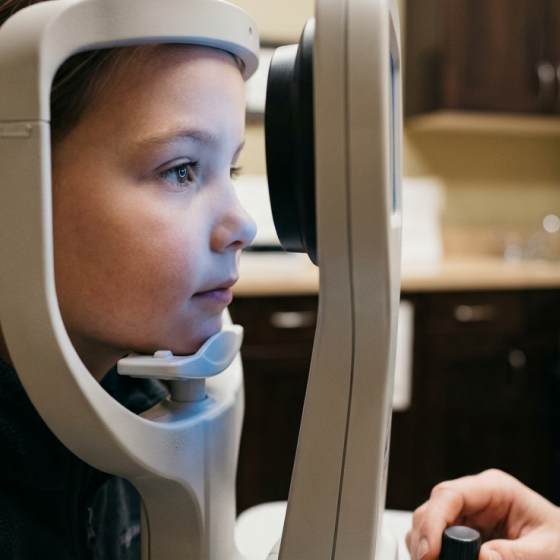
To detect progressive nearsightedness early, we use advanced, noninvasive technology, including an optical biometer. This instrument measures your child’s axial length (the exact length of the eye from front to back) along with their corneal curvature.
By tracking these measurements over time, we can determine if your child’s eyes are elongating too quickly and see if a myopia management plan is recommended. These measurements are also important to track the efficacy of your child’s treatment once they start.
Our optometrists guide parents and children through every step of the process, selecting a treatment method that fits seamlessly into your child’s lifestyle, sports, and daily preferences.
Treatment Options to Slow Myopia Progression
Myopia management aims to prevent the progressive worsening of nearsightedness in growing children. Depending on the treatment method selected, these personalized programs can effectively slow eye elongation and prescription changes by 50% or more.
These specialized, single-use contact lenses are designed specifically for children to wear during the day. They provide clear distance vision while simultaneously sending signals to the eye that help slow down its growth.
We prescribe Acuvue Abiliti 1-Day contact lenses and CooperVision MiSight 1 Day contact lenses as part of our myopia management program. These daily disposable soft contact lenses provide a convenient option for active kids and teens.
Using innovative lens technology, MiYOSMART eyeglass lenses look like regular glasses but feature a specialized ring-shaped treatment zone. They correct your child’s vision while encouraging the eye to grow at a more normal pace.
MiYOSMART lenses should be worn for 15 hours per day (i.e., during all waking hours) to provide maximum effect.
Orthokeratology (ortho-k) involves wearing custom-fitted, breathable lenses while sleeping. The lenses are custom-made for your child and gently reshape the front surface of the eye overnight, allowing your child to see clearly throughout the day without wearing glasses or contacts.
Ortho-k can be a particularly good option for active children involved in swimming, martial arts, gymnastics, and other activities where glasses or contact lenses provide a barrier.
Administered as a single drop in each eye at bedtime, low-dose atropine gently relaxes the eye’s focusing mechanism to help slow down axial growth without disrupting normal daytime vision.
Low-dose atropine can be a great option for younger children or as a combination treatment with glasses or contact lenses.
Accessible Myopia Care for Growing Families
Routine eye care plays an essential role in protecting your child’s vision as they grow and learn. Scheduling annual eye exams allows us to monitor your child’s sight, screen for conditions like myopia, and step in with personalized support when it matters most.
To make routine care accessible for local families, Saskatchewan Health covers the cost of an annual eye exam for all children under the age of 18. Bring your child in for their annual exam or to discuss myopia management at our clinics in North Battleford and Unity.
Brands We Carry











Visit Us in North Battleford or Unity
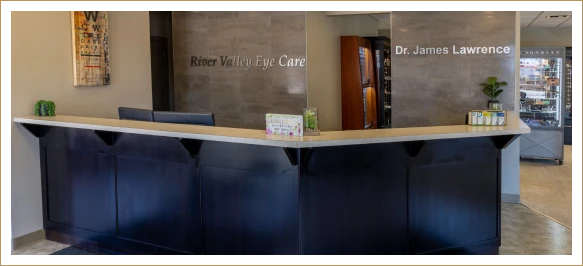
North Battleford
Address
- 1471-100 Street
- North Battleford, SK S9A 0W1
Contact Information
- Phone: 306-445-4451
- Email: info@rivervalleyeyecare.com
Hours of Operation
*Closed from 12:00-12:45 PM for lunch
Unity
Address
- 264-2 Ave West
- Unity, SK S0K 4L0
Contact Information
- Phone: 306-228-2722
- Email: info@rivervalleyeyecare.com
Hours of Operation
*Closed from 12:00-12:45 PM for lunch
**Contact the clinic for doctor availability. See social media for updated weekly hours.
About Us
Specialty Eye Care
Eyewear & Contacts
Our Locations
North Battleford
- 1471-100 Street
- North Battleford, SK S9A 0W1
Unity
- 264-2 Ave West
- Unity, SK S0K 4L0
Contact Us
North Battleford
- Phone: 306-445-4451
- Email: info@rivervalleyeyecare.com
Unity
- Phone: 306-228-2722
- Email: info@rivervalleyeyecare.com